Showing posts with label Mobile. Show all posts

Tuesday, 5 January 2016

MediaTek MT2523 Series of Chipsets Launched for Smartwatches

MediaTek in an attempt to increase the adoption of its chipsets in the wearable segment has launched a new wearable-focused chipset on Monday. The MediaTek MT2523 is said to be designed for activity trackers and fitness-focused smartwatches.
The Taiwan-based chipmaker also claimed that the new chipset is the "world's first system-in-package (SiP)" that offers features such as GPS and dual-mode Bluetooth Low Energy. The chipset is also said to support MIPI high-resolution mobile screen. It bears a Cortex-M4 processor onboard.
The company says that the new SiP has been printed on a circuit board area that is 41 percent smaller than other chipsets designed for wearables. Another notable highlight suggested by MediaTek is that the devices powered by MT2523 can last more than a week on single charge. We however will have to wait for the devices that pack the new MediaTek MT2523 SoC to check the battery life. The SiP also packs a micro controller unit (MCU), and a power management unit (PMU). MediaTek expects that the new SiP will be available to wearable makers starting the first half of 2016.
Announcing the new chipset, JC Hsu, MediaTek's corporate vice president and general manager of IoT business unit said, "The MT2523, with its combination low power and rich features, marks a significant step forward for the smart watch and wristband industries. Power combined with efficiency has always been the hallmark of MediaTek technology solutions and we are leading the charge in bringing this know-how to IoT products."
mediatek_mt8581_soc.jpg
Apart from the MT2523 SoC, MediaTek announced the MT8581 system-on-chip designed for Ultra High Definition (4K) Blu-ray players. The company expects mass production for the MT8581 to start in the second half of 2016. The Taiwanese company also announced the MT7697 SoC focused on the Internet of Things (IoT) in the home applications such as home appliances, home automation, and smart gadgets. MediaTek says that MT7697 will be available in the first half of 2016.

Google, Lenovo to Unveil Project Tango Devices at CES 2016: Report


We've been hearing about Google's Project Tango for over a year now, and according to a report, it is finally coming to fruition, with a major PC manufacturer looking to use the technology.
Google and Lenovo have shared a teaser (via Android Headlines) for a Thursday announcement, with the words, "Mobile devices should see and navigate the world, the way we do. Join Lenovo & Google's Project Tango for a special announcement..." According to a report by ComputerWorld, a product line using Project Tango is likely to be announced at CES 2016 by Lenovo, including a consumer-facing product.
To recall, Lenovo in late 2014 acquired Motorola Mobility from Google, though the Internet giantretained the mobile firm's Advanced Technology and Projects (ATAP) group.
Not much is known about the Project Tango devices Lenovo reportedly intends to launch at CES 2016, but applications of machine vision in mobile devices can be expected.
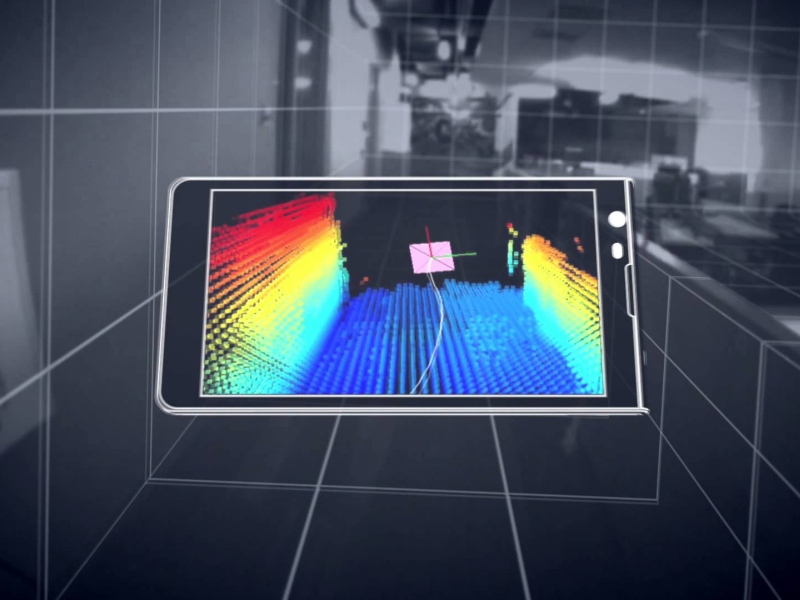
Project Tango is an imaging technology that uses a combination of various sensors to "see" the environment around you and generate spatial awareness for your phone. Developed by a team led by former Kinect lead Johnny Lee, Tango was created by Google's Advanced Technology And Projects group, and uses a number of different sensors on your phone or tablet to create a sophisticated picture of the world around it.
An infrared emitter and infrared camera act as a range-finder to measure the distance between your phone and various objects, allowing them to be mapped in three dimensions. A wide angle camera adds details about the location, and other phone sensors including accelerometers, gyroscopes, and barometers combine to help Tango calculate not just what is around your phone or tablet, but also the angle at which you are looking at an object, how far away it is, and what it looks like.
This level of detail is an incredible technical feat, and Tango could have many applications for users. And developers won't have to work on it from the ground up, as Google has APIs to allow them to use data from Tango.
There are multiple APIs that developers can use, which could see Tango getting integrated into a wide variety of apps, just as other sensors on your phone get used in different ways. For one thing, you could now have apps that can easily measure the dimensions of an object - once you know an object's distance from the camera, basic geometry can be used to figure out the rest.
Capturing 3D images using the depth sensor is another possibility - right now there are plenty of apps that allow you to take two images side by side with a slightly shifted perspective, but of course, that only provides the illusion of depth. Tango could make it possible to scan your entire room and have your furniture stand out in the virtual environment, leaving you free to roam around it.
Imagine combining that with a cheap headset like Google Cardboard to showcase homes to prospective buyers. Real estate companies in India are already doing this with 2D photos, and investing in expensive 3D photography solutions that can cost close to a lakh. Project Tango can bring the technology into the cellphone in your pocket, if it catches on.
The growing interest in Virtual Reality and Augmented reality shows just how Project Tango could mature. We already have apps such as "smart" books for children that come alive when viewed through a screen. This could become far more powerful with Project Tango, as you would be able to explore this virtual world and view it from different angles, using the other sensors on your phone as a guide.

Project Tango partners include Nvidia, Qualcomm, and Intel. Only MediaTek is missing from this list, and if the first few Tango devices can deliver on their promise, then that won't be the case for long either. It's very likely that in the next year or so, the technology behind Tango is going to become as common as having a gyroscope on your phone.

Motorola Moto 360 (2nd Gen) Men’s Collection launched; prices start from Rs 19,999

Motorola has launched a new Moto 360 smartwatch collection based on the same Moto 360 (2nd Generation) which was launched in December last year. The new Men’s Collection now features more options such as cognac leather, black leather and black metal variants that have gone on sale via Amazon. In addition, one will also find a larger Moto 360 with the 46mm case in the cognac leather variant which is exclusive to Amazon.
The bigger cognac leather with a 46mm case is priced at Rs 20,999, while the standard version sells for Rs 19,999. The other variants include a black leather version priced at Rs 19,999 and an black metal version priced at Rs 23,999.
Motorola Moto 360 2nd Gen Mens Collection Cognac Leather
Launched on 1 December 2015, the Moto 360 (2nd Gen) packs in better internals compared to its predecessor. The device packs in a Corning Gorilla Glass 3 with a backlit LCD display that packs in a 1.2 GHz quad-core Qualcomm Snapdragon 400 processor and 512MB of RAM. The smartwatch packs in 4GB of internal storage, runs Google’s Android Wear and is IP67 dust and water resistant.

Asus ZenWatch 2 With Android Wear Launched Starting Rs. 11,999

Asus on Tuesday launched the ZenWatch 2 smartwatch in India. The successor to last year's ZenWatch, the ZenWatch 2 comes in two sizes: 1.45-inch (WI502Q) and 1.63-inch (WI501Q). The smaller version is priced at Rs. 11,999 while the 1.63-inch variant will cost you Rs. 14,999. Both the smartwatches are available to purchase via Flipkart starting Tuesday. Asus added that at a later point, the smartwatch will also be sold through its ASUS Exclusive Stores.
The Asus ZenWatch 2 runs Android Wear and offers Asus ZenUI integration with a range of software features. For instance, if you want to mute a call, you can do so by simply covering the ZenWatch 2 with your hand. You can also find your smartphone using the timepiece, and control several phone settings such as Wi-Fi among others right from your smartwatch.
The Asus ZenWatch 2 WI502Q, which is available in silver colour option, sports a 1.45-inch Amoled display with a screen resolution of 280x280 pixels (accounting to 273 ppi pixel density). The Asus ZenWatch 2 WI501Q, available in silver and gunmetal colour options, sports a 1.63-inch AMOLED display with a screen resolution of 320x320 pixels (accounting to 278 ppi). Both the variants offer 2-finger touch support.
As for the specifications, both the ZenWatch 2 models are powered by a quad-core QualcommSnapdragon 400 SoC paired with 512MB RAM. Both the Asus ZenWatch 2 models come equipped with 4GB eMMC internal storage and offer support for Bluetooth 4.1 and Wi-Fi.
The Asus ZenWatch 2 W1502Q and WI501Q also share the same magnetic charging cable and have IP67 certification, which means that the smartwatch can withstand immersion in water in up to 1-metre depth for up to 30 minutes. The Asus ZenWatch 2 WI502Q has a 300mAh battery while its bigger sibling comes equipped with a 400mAh battery. The company claims that the Asus ZenWatch 2 will deliver two-three days battery life on a single charge. The WI501Q version comes with a 22mm rubber or leather strap. The W1502Q comes with a 18mm leather strap.
"Consumers today wish to use gadgets that make their lives simpler by aiding their hectic lifestyles. The Asus ZenWatch 2 achieves this through its features that make it possible for the users to manage their lives right on their wrists," said Peter Chang, Region Head - South Asia & Country Manager for Asus India. "Combining luxury in a slim form-factor, the ZanWatch 2 furthers our vision of providing high-end products at affordable price points."

Lenovo Vibe K4 Note Launched in India: Price, Full Specifications, and More

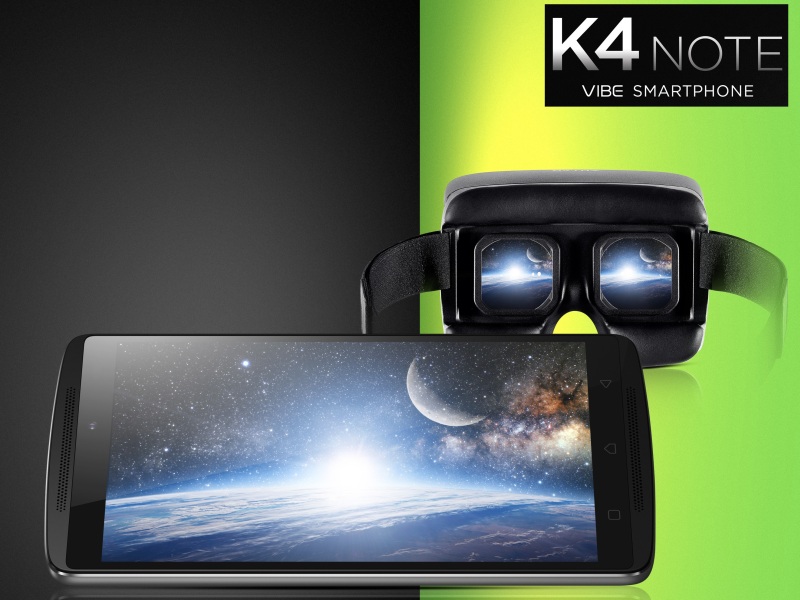
Lenovo on Tuesday launched the much-anticipated successor to the popular K3 Note smartphone in India, the Vibe K4 Note. Priced at Rs. 11,999, the Lenovo Vibe K4 Note will be available exclusively from Amazon India in its first flash sale on January 19, with registrations beginning Tuesday.
(Also see: Lenovo Vibe K4 Note Full Specifications)
The company also launched a Lenovo Vibe K4 Note bundle with AntVR virtual reality headset, priced at Rs. 13,299. The first few flash sales will only feature the Lenovo Vibe K4 Note VR Bundle, at a special price of Rs. 12,499. The VR headset features a standalone price of Rs. 1,299.
(Also see: Lenovo Vibe K4 Note vs Lenovo K3 Note)
Running Android 5.1 Lollipop with a light-version of the company's Vibe UI skin on top, the dual-SIM dual-4G Lenovo K4 Note bears a 5.5-inch full-HD (1080x1920 pixels) IPS display with a pixel density of 401ppi, and Corning Gorilla Glass 3 protection. The company claims a 1000:1 contrast ratio, and features like user-controlled colour balance. It is powered by an octa-core MediaTek MT6753 SoC, coupled with 3GB of DDR3 RAM.
(Also see: Lenovo Vibe K4 Note vs Motorola Moto G (Gen 3))
The Vibe K4 Note comes with 16GB of inbuilt storage that's expandable via microSD card (up to 128GB). Connectivity options include 4G LTE and NFC. The 9.1-mm thick Lenovo Vibe K4 Note weighs 158 grams, and sports a 3300mAh battery with fast charging. The company announced that a premium leather cover, as well as wood covers would be launched soon. The smartphone also sports dual-front speakers, alongside Dolby Atmos audio. One of the highlight features of the handset is its fingerprint scanner, placed below the camera module on the rear panel.
The company is also touting the TheaterMax technology on the Vibe K4 Note, which converts regular content to immersive VR content.
"More than 50 percent of digital content is consumed on mobile devices today, and smartphones continue to be people's' primary personal entertainment device. We expect the proportion will continue to grow in the future and the expectations of newer, more sophisticated functionalities along with it. Lenovo TheaterMax, powered by Lenovo VR, sets us apart with our commitment to design cutting-edge smartphones that meet the needs of consumers at an extremely friendly price-point," said Sudhin Mathur, Director- Smartphones, Lenovo Group.

Monday, 4 January 2016

iBall Slide Cuddle 4G Tablet With 6.95-Inch Display Launched at Rs. 9,999

iBall has launched a new 4G-enabled tablet, the Slide Cuddle 4G, priced at Rs. 9,999. The iBall Slide Cuddle 4G tablet comes with dual 4G SIM support, which can be considered a highlight of the device. iBall adds that the voice-calling tablet can support download speeds of up to 150Mbps.
The company also touts that the new tablet supports 21 regional languages (read + write). The languages listed to be supported by Slide Cuddle 4G include Assamese, Bengali, Bodo, Dogri, Gujarati, Hindi, Kannada, Kashmiri, Konkani, Maithili, Manipuri, Malayalam, Marathi, Nepali, Oriya, Punjabi, Sanskrit, Santali, Sindhi, Tamil, and Telugu. The Slide Cuddle 4G supports one regular SIM card and one Micro-SIM card.
The tablet features a 6.95-inch display with a screen resolution of 1024x600 pixels. It is powered by a 1GHz quad-core processor coupled with 2GB of RAM. It packs 16GB of built-in storage and supports up to 64GB (via microSD card).
iball_slide_cuddle_4g_rear.jpg
The Android 5.1 Lollipop-based Cuddle 4G tablet sports an 8-megapixel rear autofocus camera with LED flash and 5-megapixel front camera. The dual SIM dual standby tablet comes with Wi-Fi, Bluetooth, 3G, GPRS/ EDGE, GPS, and Micro-USB connectivity options. It also supports USB OTG option.
Last month, iBall launched the Andi 5.5H Weber smartphone, priced at Rs. 6,499.
The Andi 5.5H Weber is a dual-SIM (GSM+GSM) device which runs Android 5.1 Lollipop out-of-the-box. It comes with a 5.5-inch HD (720x1280 pixels) IPS display and offers a pixel density of 267ppi. The smartphone is powered by a 1.3GHz quad-core processor (unspecified) coupled with 1GB of RAM. The Andi 5.5H Weber comes with 8GB of inbuilt storage, which is further expandable via microSD card (up to 32GB).

Lenovo Vibe S1 Lite With 8-Megapixel Front-Facing Camera Launched

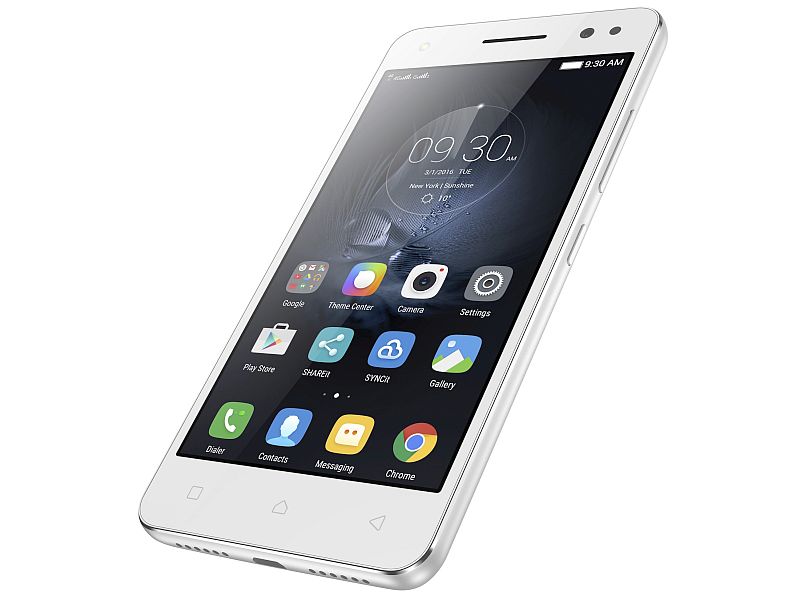
Lenovo has launched the new Vibe S1 Lite smartphone ahead of CES 2016. The smartphone, priced at $199 (approximately Rs. 13,250), is expected to go on sale in early 2016. We can expect to hear more from the company at the CES trade show.
The Lenovo Vibe S1 Lite comes with more basic innards when compared to the Lenovo Vibe S1,launched last year. The Vibe S1 Lite will be available in Blue and White colours.
For specifications, it features a 5-inch (1080x1920 pixels) full-HD display, same as the Vibe S1. The handset is powered by a 1.3GHz octa-core MediaTek processor coupled with 2GB of RAM. On the other hand, the Vibe S1 (Review) came with a 64-bit 1.7GHz octa-core MediaTek MT6752 processor coupled with 3GB of RAM.
The Android 5.1 Lollipop-based Lenovo Vibe S1 Lite supports dual-SIM dual standby. The handset packs 16GB of inbuilt storage and supports expandable storage via microSD (up to 128GB).
The 13-megapixel rear camera comes with dual-tone LED flash, phase detection autofocus (PDAF), and BSI sensor. The highlight of the Vibe S1 Lite is however the 8-megapixel front-facing camera which comes with an LED flash. The Lenovo Vibe S1 featured dual-front cameras including an 8-megapixel and 2-megapixel front cameras.
It measures 145x71x8.5mm, and weighs 129 grams. The handset supports 4G, 3G, Bluetooth, Wi-Fi, GPS/ A-GPS, and Micro-USB. The handset is backed by a 2700mAh battery. The Vibe S1 Lite launch was first reported by Android World.
The Chinese company ahead of CES 2016 unveiled several new devices including 12 new laptops, an all-in-one system, a tablet, a monitor, two 2-in-1 laptops, two ThinkCentre-in-one systems, apart from a new budget laptop with Chrome OS and Windows 10 variants.

Samsung Galaxy Note 5 Now Receiving December Security Update in India

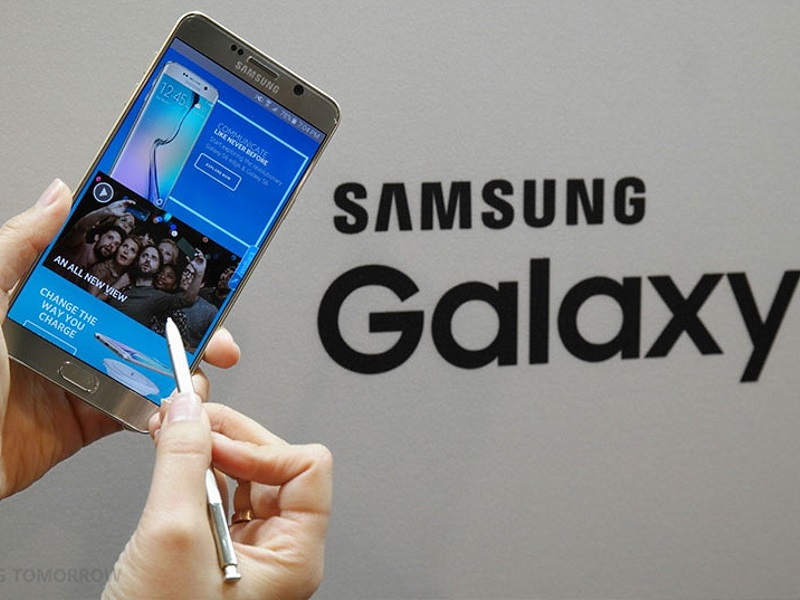
Samsung India has started rolling out the Android December security update for the Galaxy Note 5. The latest Android security update is currently rolling out to Samsung Galaxy Note 5 users in India and comes with firmware version N920GDDU2AOL1. The December security update for the Galaxy Note 5 is about 72MB in size and users can manually check for the update via Settings > About Device > Software Update.
To recall, the Samsung Galaxy S6 and Galaxy S6 Edge+ smartphones had recently started receiving the same Android December Security update. Users report (via Sammobile), the Galaxy Note 5's security update brings improvements to voice calls, apart from security enhancements. Samsung has also made it clear that downgrading after the installation of this update will not be possible. The company has also detailed its December security update on its dedicated website. It said, "Samsung Mobile is releasing a maintenance release for major flagship models as part of monthly Security Maintenance Release (SMR) process. This SMR package includes patches from Google and Samsung."
To recall, soon after the revelation of a major Android vulnerability called Stagefright, which affected large pool of devices, Google and Samsung announced plans to release security patches for its devices about once every month. This was soon followed by other Android OEMs including LG and Motorola. An earlier report had claimed that out of all the Android OEMs, LG was best at offering security updatesfor its devices.

Apple iPhone sales in 2016 to crash, says analyst; but Apple could easily prove it wrong

Apple’s long profitable ride is expected to hit a speed breaker. A drop for the first time as much as six percent, said analyst Katy Huberty in a research note over at Morgan Stanley that has now turned into the talk of the tech town.
This prediction isn’t surprising given that iPad sales saw a dip for the first time, lack of new innovation (read Apple Watch) and the fact that the company’s record-breaking cash registers are ticking owing to iPhones. Huberty believes that iPhones will see 218 million sales mark in 2016 which is a 5.7 percent decline.
Getting to figures, the year 2015 ending September, Apple recorded iPhone sales of 231.11 million units that was up by 34 percent compared to 2014. Despite the upward trend so far, the analyst believes the iPhone sales may not be stronger, owing to saturation in international markets, the 2-year upgrade cycle normally seen with Apple users coupled with Apple’s revelation about 30 percent Android switchers (the largest ever) for last year. Well, the points are valid, but this may not necessarily mean Apple’s upswing days are numbered.
Along with its premium, cutting-edge products, there’s ‘one more thing’ that gives Apple an edge over competitors – a loyal fan-following. So, the brighter side is Apple doesn’t have to worry about attrition or retaining costumers, and rather focus on adding more numbers to this loyal list. As Huberty points out saturating markets is the prime concern, but the company knows it better than all of us.
Firstpost-iPhone-5s-size-comparison-6s-6s-plus
Apple has swiftly moved from launching one model to two, and likely to launch three models of the iPhone in 2016. The expanding portfolio of iPhone clearly reveals that the company is poised to take its money minting iPhone to different price segments.
Unlike others, Apple hasn’t tapped on the potential of emerging markets like India. The company failed at building the cheaper iPhone 5c and the latest iPhone 6s models didn’t really take off due to sky rocketing prices. The company rather realise that India is a large market but an emerging one that swears by ‘value for money’ devices. By value for money, we don’t mean cheap and the fact that iPhone 5s was received better than the 5c will vouch for it. The company is playing along a similar game of keeping the prices for latest device high and slashing the prices of the older products. For instance, the iPhone 5s recently got a massive price cut, but is it really worth the buy? This would remind some of us about how the iPhone 4s was considered the best selling Apple device in India even after generation of leaps.
With the new device that is reportedly set for March launch, the company could possibly change this. The company’s alleged iPhone 7c – a mix of the iPhone 5s, 5c and 6s – will be positioned as a budget device and the company is likely to ship between 20 million and 30 million units by the end of the year, according to the chatter online. It is said to feature a 2.5D screen, along with a A9 processor, paired with 2GB RAM and dipped in gold, silver and black colour variants. If priced well, the company could reach out to the mid-rangers who will be willing to make the much required switch as Apple is considered a status symbol here.
Besides, the company has been gung-ho about the China market and over the time has learnt to not treat India as a trash bin. In the past we’ve seen Apple introduce buybacks, aggressive advertisements and more. In fact, it surpassed the 1 billion mark in India, wherein it doesn’t enjoy a good market share. Apple has become more flexible and open in the last couple of years. It has learnt to adopt and re-strategise, putting behind some stringent statements it made in the past. If the iPhone is driving force for revenue, then a well-priced iPhone for emerging markets will take its numbers further sky rocketing. The numbers Apple has been achieving by mere two models compared to the scores of Androids available there is commendable.
With Samsung’s sales sliding off a slippery slope, it is quite possible that there will be a fair number of switchers this year too, unless Samsung pulls out a device that will give others a run for its money. Moreover, the number of users adopting iPhone even after year ending September figures has been growing by leaps and bounds. For instance, the survey by the Yahoo-owned analytics firm Flurry showed Apple accounted for 49.1 percent of smartphones and tablets activated over the Christmas week, compared to 19.8 percent for South Korean rival Samsung. A lot had been said and written about Apple has a ‘falling empire ‘ after Steve Jobs death, but the company under the leadership of Tim Cook rose above all odds and turned profitable than ever before.

Oppo to Launch Camera-Focused F-Series Smartphones This Month

Oppo is all set to launch its new F-Series of smartphones in global markets in January. The Chinese tech firm, known for its smartphones with rotating cameras and photo-stitching technology, said the new F series smartphones will keep photography as its central focus.
The Oppo F-Series will debut with the Oppo F1 smartphone in January. According to Sky Li, OPPO Vice President and Managing Director of International Mobile Business, the new series is said to "inherit the excellent camera performance and exquisite design tradition." He adds that the F series smartphone will include some "impressive specs" at "amazing prices."
"We are very excited to introduce the F series, which will allow an even wider range of users from all around the world to experience Oppo's outstanding photography technology," said Li. No other information was shared by the company for the new smartphone. We can expect to see Oppo making some announcements during the CES 2016 trade show.
It is being rumoured that the upcoming Oppo F1 smartphone will be the global version of the Oppo A53, which was launched in China last month. As a recap, the Oppo A53 features a 13-megapixel rear camera with CMOS sensor and LED flash, apart from a 5-megapixel front-facing camera. Since this camera setup is available on majority of the handsets these days, it is difficult to say how this makes it a camera-focused smartphone without observing the actual image quality.
Some of the other specifications are 5.5-inch HD (720x1280pixels) resolution display; octa-core Qualcomm Snapdragon 616 processor; 2GB RAM; 16GB of expandable storage; and 3075mAh battery. The dual-SIM supporting (Micro-SIM+Nano-SIM) smartphone runs ColorOS 2.1 based on Android 5.1 out-of-the-box.

ASUS ZenFone Max priced in India at Rs 9,999 launched today; pre-booking open on Amazon, Flipkart

ASUS ZenFone Max priced in India at Rs 9,999 was launched in India today and amongst its foremost features is the 5,000 mAH battery – pre-booking of the smartphone opened at noon on Monday on e-commerce websites Amazon.in andFlipkart.com.
According to the Taiwanese tech giant said the ASUS ZenFone Max is a 4G-enabled smartphone.
“Timed perfectly with the new year, ASUS ZenFone Max smartphone combines a powerful battery with an innovative camera making it the perfect utility product for users who demand performance at all times,” Peter Chang, Region Head – South Asia and Country Manager for ASUS India said in a statement.
ZenFone Max is best suited for people who demand a long-lasting battery life. Smartphones 5,000 mAH lithium-polymer battery offers 37.6 hours of 3G talk time, that is equivalent to 32.5 hours of Wi-Fi web browsing or 72.9 hours of music playback or 22.6 hours of video playback, when fully charged.
The 5.2 mm thin chassis of the ASUS ZenFone Max, which will be available at the company’s exclusive stores and other retailers from the second fortnight of January, packs a 13-megapixel primary and 5-megapixel front PixelMaster camera.
ASUS ZenFone Max primary camera has f/2.0-aperture lens with ultra-fast laser auto-focus that ensures crystal clear images and enables the smartphone to capture up to 400 percent brighter photos in low light conditions.
ASUS ZenFone Max smartphone uses the latest 4G LTE technology for high mobile data speeds and comes with a Qualcomm 8916 (Snapdragon 410) quad-core processor assisted by a 2 GB RAM and a 16 GB internal memory with an optional expandable memory of 64GB.
ASUS ZenFone Max also combines durability with a stunning display as it comes with ASUS TruVivid technology for the best clarity, brightness and touch response.

Sunday, 3 January 2016

Swipe F-Band fitness tracker launched in India, available on Snapdeal at Rs. 1,499

Swipe has introduced F-Band fitness tracker in India at Rs. 1499. The tracker will be exclusively available via Snapdeal starting January 7 in blue and red variants.
According to the company, Swipe F-Band fitness tracker enables users to keep track of various activities. For instance, the band will track the number of steps walked. It will then display the number of calories you burned.
The tiny gadget also monitors sleeping activity with an ability to connect to a smartphone via Bluetooth. However, one needs to install F-band app, which retrieves all the required information. The tracker also includes a display that looks like a smartwatch instead of a simple fitness band.
Swipe F-Band fitness tracker includes a 55mAh battery that according to the company, has the capability to work up to seven days on a single full charge.
The tracker band is priced at Rs. 1499, but you can get it for Rs. 1299 if you are among the first 100 customers on Snapdeal.
There is a high competition among companies such as Yu, Xiaomi, Fitbit, Samsung, Noise, Motorola, Huawei and Sony in the wearables market with more in the fray in 2016.
We recently saw the sale of Huawei Honor Band Z1via Flipkart for Rs. 5499, which promises three days of battery life with support for iOS and Android.

Lava launches Ivory M4 flagship tablet with 8-inch IPS display and 3G at Rs 9,299

Mobile handset-maker Lava International Limited has launched Ivory M4, a ‘flagship device’ to strengthen its tablet portfolio. It is priced at Rs. 9,299 and will be available across all national retail stores, multi-brand outlets and online platforms, the company said.
“We see a tremendous potential in the tablet category and Lava has aggressive plans to expand its portfolio in this space. We will launch multiple devices in the next three months to meet the demand and our latest offering Ivory M4 will redefine the benchmarks in terms of features available in less than 10k price segment,” said Raman Sharma, Lava’s Vice President and Business Head – Tablets.
Lava Ivory M4 features an 8-inch HD IPS display with 1280×800 resolution and is 7.9mm thick. It comes with 2GB of DDR3 RAM and 1.3GHz Quad Core Processor as well as 16GB of internal storage. The device runs on Android Lollipop 5.1 with and supports single-SIM 3G. it packs a 4000mAh Li-Po battery.
In terms of camera, it sports an 8-megapixel autofocus rear shooter with HD recording. In the front is a 3.2-megapixel camera that offers video calling experience. Other camera modes include Panorama, macro, Live Photo, Motion track and Face beauty. On the connectivity front, the tablet offers 3G, USB, WCDMA, GSM, Wi-Fi 802.11 b/g/n, Micro-USB, and Bluetooth support.

Motorola Moto G (3rd gen) gets Android 6.0 Marshmallow update in India

Motorola has given a New Year’s treat to its Moto G3 users in India as the phones will now be get an Android 6.0 Marshmallow update.
“Here is something new and amazing for your Moto G (3rd Gen.), the Android 6.0 Marshmallow!” Motorola India announced on its Twitter account.
However, the exact date of the rollout was not mentioned in the tweet.
The third-generation phone of the Moto G series will now be upgraded from Android 5.1.1 (Lollipop) to Android 6.0.
The 2 GB update will add features like “Doze Mode” to extend the battery life, Google Now on Tap and simpler volume control and would remove the “Migrate” and “Assist” apps.
How to check for the update:
Generally, the phone would notify you about the update. If, however, one does not receive the notification, one can manually check for the update by going to Settings > About Phone > System Update.
The Moto G comes with a 5-inch HD display with a layer of Corning Gorilla Glass 3. It will sport the Android 5.1.1 OS along with proprietary Motorola features such as Moto Display, Quick Capture and Chop Twice. The phone will house a Qualcomm Snapdragon 410 SoC with a 1.4GHz quad-core processor. This will be paired with 1GB of RAM for the 8GB storage variant and 2GB RAM for the 16GB storage variant.
On the camera front, you will get a 13MP rear snapper along with a 5MP front-facing camera. The Moto G will come in the dual SIM configuration and will support 4G SIM cards as well. A 2,470mAh capacity battery completes the package.


Bigger screens and videos, cheaper smartphones to dominate in 2016: Micromax

The year that has just begun will be the year of large screens and videos, the demand for cheaper smartphones will grow and 3G and 2G users will continue to co-exist over the next few years in India, Micromax, one of the country’s leading smartphone makers, has predicted.
In 2016, entry of Chinese and Indian brands in mobile manufacturing market would be a key driver for new business models to emerge to ensure unit level profitability, the Micromax study noted, adding that it may be difficult for Chinese companies to enter and flourish if the Goods and Service Tax (GST) is implemented.
It also pointed out that e-commerce might flatten out and mobile internet ecosystem would grow beyond the 150-200 million smartphone users.
“The massification of smartphones will continue in India to keep on catering to the needs of first time smartphone users and the growth will depend on vernacular usage, access costs and penetrating distribution and awareness,” the findings showed.
Although the country saw the proliferation of 4G-enabled devices, 3G and 2G users will continue to co-exist over the next few years.
“The auction of LTE (4G) centric spectrum in 2016 could make 4G to play a crucial role in building Digital India,” it noted.
Samsung and Micromax dominated the handset market last year by ramping up domestic manufacturing.
Shockingly, the study said that in 2016, e-commerce websites may flatten out as these platforms will cut back their cash burns. However, the reach will expand to newer towns.
The study pointed out that with the wide availability of data network, content, personalisation and hardware such as large screens, smartphones will become a more preferred source for video consumption in 2016.
Mobile-led services across sectors like entertainment, travel, healthcare and banking will become mainstay and mobile internet ecosystem will grow beyond the 150-200 million smartphone users.
The key to this growth will be simplification through relevant services and availability of these in various Indian languages, the study said.

Lenovo emerges as the favorite smartphone brand of 2015: Flipkar

E-commerce website Flipkart has announced that this year has been big in the affordable 4G smartphone segment and Lenovo, has emerged as the favourite smartphone brand of the year. The popularity of 4G smartphones this year clearly shows how digital customers are making a shift to the 4G segment, along with the desire to opt for affordable smartphones.
According to #FlipTrends, a year ender report by Flipkart, Lenovo A6000 Plus and Lenovo K3 Note were the top two most sought after smartphones in 2015. Motorola closely followed with two smartphones, Moto G 3rd Gen and Moto E 2nd Gen featuring at the third and sixth position respectively. Xiaomi Mi 4i and Redmi Note 4G took fourth and fifth spots followed by Samsung Galaxy On7, Samsung Galaxy J7, Micromax Canvas Xpress 2 and Asus Zenfone 5 respectively.
Lenovo, also the owner of Motorola, is also among the top five smartphone brands in India. In the bid to climb the ladder further, the company aims to double local production as well.
According to a report by The Economic Times, Lenovo aims to take the second spot in India and is looking to almost double the local production to 10 million units annually by this year. The report also adds that Lenovo plans to export from its Chennai facility and will make more models in India.